JNA Mobility

prepaid vs postpaid

why-college-students-love-prepaid-plans

Why College Students Love Prepaid Plans: Smart, Flexible, and Budget-Friendly

For college students, every dollar counts. Between tuition, books, meals, and housing, managing money wisely is essential. That’s why more and more students are turning to prepaid phone plans — an affordable, flexible way to stay connected without breaking the bank.

A prepaid plan gives you freedom, flexibility, and predictable costs, which fits perfectly with student life. Whether you’re managing limited finances or avoiding surprise bills, prepaid plans give you exactly what you pay for—nothing more, nothing less.

But beyond the basics, there’s a growing reason students are upgrading their prepaid experience through providers like JNA Mobility — one of the few that combines affordability with nationwide 5G coverage and multi-line discounts that make every line cheaper.


Understanding Prepaid Plans: A Quick Refresher

A prepaid phone plan is simple — you pay upfront for a set amount of data, talk, and text. Once that balance runs out, you can renew, change, or pause whenever you want.

Unlike postpaid contracts, prepaid plans don’t require credit checks or long-term commitments. You have total control over your phone expenses, making them a great fit for students on variable budgets.

Most prepaid plans use the same major networks (Verizon, AT&T, or T-Mobile) through MVNOs (Mobile Virtual Network Operators). That means you get the same coverage as traditional carriers, but often for half the price.

If you’re curious about how prepaid compares to other mobile options, explore our in-depth guide to prepaid vs postpaid plans to see which model saves you the most.


Why Prepaid Plans Make Sense for College Students

1. Budget Control Without the Stress

College budgets are tight — some months you have extra income from part-time work, others you’re stretching every dollar. Prepaid plans make budgeting simple because you pay a flat, upfront cost for the month.

No overage charges. No hidden fees. No surprise bills.

If you run out of data, you can easily upgrade or renew when you’re ready. Some carriers even offer data rollover, letting you carry unused data into the next month — ideal for fluctuating usage patterns throughout the semester.


2. No Credit Checks or Long-Term Contracts

Many students don’t have established credit, and that’s perfectly fine with prepaid. Unlike postpaid plans that require a credit check and binding contract, prepaid options are instant, flexible, and commitment-free.

Sign up, activate your SIM, and you’re good to go — no paperwork, no deposits, no penalties for canceling.

For international students, prepaid plans are even more convenient. You can buy a U.S. prepaid SIM the day you arrive, activate it instantly, and start using your phone without needing local credit history or documentation.


3. Flexible Data Options for Every Lifestyle

Whether you’re mostly on Wi-Fi or streaming lectures and music non-stop, prepaid plans let you choose exactly how much data you need.

Students who primarily use campus Wi-Fi might only need 5–10 GB per month. But for heavy users — those watching Netflix, FaceTiming, or gaming — unlimited plans offer the freedom to use your phone as much as you want.

You can switch plans anytime, scaling up or down as your data needs change. No cancellation fees. No waiting periods. Just flexibility on your terms.


4. Easy to Manage, Refill, and Save

Prepaid carriers are designed for convenience. Most let you manage your plan online or through mobile apps. You can top up manually, schedule auto-pay renewals, or even add funds through prepaid refill cards.

Many providers, including JNA Mobility, offer extra savings when you enable auto-pay or add multiple lines.

With JNA Mobility, the concept is simple: the more lines you add, the more you save. Their plan pricing automatically adjusts for each additional line — a great deal for roommates, siblings, or couples looking to cut costs together.

Plus, JNA Mobility runs on nationwide 5G coverage, offering premium network performance at a fraction of what big carriers charge. You’ll enjoy fast connectivity and reliable service, with speeds only reducing after 20GB per line — still more than enough for most college users.

If you’re serious about saving money while staying connected, JNA Mobility’s prepaid 5G plans are among the best options for students who want quality and affordability in one.


5. Ideal for Students Studying Abroad or Traveling

Planning a semester abroad? Prepaid plans are perfect for global students. Many carriers offer international roaming add-ons or travel-friendly SIMs that let you stay connected overseas without expensive roaming charges.

Alternatively, you can purchase a local prepaid SIM at your destination and activate it in minutes — avoiding steep international rates.

Prepaid flexibility means you can pause your U.S. plan while abroad and reactivate it once you return, saving you even more during travel seasons.


6. Better Privacy and Data Security

Privacy matters — especially for young adults managing finances online. Prepaid plans require minimal personal information to activate, making them ideal for privacy-conscious users.

You pay upfront, there’s no linked credit account, and missed payments don’t affect your credit score. It’s a straightforward setup that keeps your personal data secure while giving you total financial control.


How to Choose the Right Prepaid Plan for College

Picking the perfect plan can be confusing with so many carriers out there. Here’s a quick checklist to simplify the process.

1. Check Campus Coverage

Find out which networks perform best where you’ll spend most of your time — dorms, classrooms, and off-campus housing. Many prepaid carriers (including JNA Mobility) use major 5G networks for nationwide coverage, ensuring consistent service anywhere you go.

2. Match Data to Your Usage

If you’re online all day for classes and social media, look for high-data or unlimited options. If you mostly use Wi-Fi, choose a smaller plan and save.

3. Look for Group or Multi-Line Savings

Multi-line discounts are one of the easiest ways to cut your phone bill. JNA Mobility makes it effortless—every additional line brings the per-line price down, so you and your friends or roommates can all benefit.

4. Compare Extra Features

Perks like hotspot access, free streaming, or international calling credits can add real value. Always compare these details before committing to a plan.

For a detailed breakdown, check our upcoming guide to the best prepaid phone plans for students, where we’ll compare top providers, coverage, and perks side-by-side.


While JNA Mobility stands out for its price-to-performance ratio, several other prepaid options are also popular among students:

  • Mint Mobile: Known for multi-month savings and flexible data tiers.
  • Visible: Unlimited data on Verizon’s 5G network with no hidden fees.
  • Cricket Wireless: Family-friendly plans with strong nationwide coverage.
  • Boost Mobile: Great short-term plans and competitive add-ons.
  • AT&T Prepaid: Trusted reliability with optional data rollover.

Each has its own strengths, but few match JNA Mobility’s combination of affordability, 5G access, and scalable savings.


Building Smart Financial Habits Early

Beyond saving money, using a prepaid plan teaches valuable lessons in budget management and financial discipline. You’ll learn to track your spending, evaluate your data usage, and make informed financial decisions — habits that carry into post-college life.

It’s also a great way to build independence without the risk of overspending or racking up credit-related penalties.

And once you graduate, you’ll have the flexibility to move up to a business or postpaid plan if needed, without ever feeling locked in.


Final Thoughts: Freedom, Flexibility, and Real Savings

For college students, prepaid plans represent more than just lower bills — they represent freedom. Freedom from contracts, credit checks, and surprise fees. Freedom to switch, pause, or upgrade anytime.

If you’re ready to simplify your mobile life and save money, explore JNA Mobility’s prepaid 5G plans today. With competitive pricing, nationwide 5G coverage, and multi-line discounts, it’s one of the most student-friendly options available.

Stay connected, stay in control, and keep more money where it belongs — in your pocket.

Why College Students Love Prepaid Plans: Smart, Flexible, and Budget-Friendly Read More »

New Phone Plan: Tips for a Smooth Switch

New Phone Plan: Tips for a Smooth Switch

Switching to a new phone plan can feel overwhelming at first—especially when you’re faced with dozens of carriers, pricing tiers, and hidden terms that seem designed to confuse you. But the truth is, changing your plan doesn’t have to be a nightmare. Whether you’re aiming to cut costs, boost coverage, or simply get features that make more sense for your lifestyle, a well-planned switch can bring long-term benefits.

If you take the time to understand your needs and explore your options, switching can actually be one of the smartest financial and tech moves you’ll make this year. Let’s dive into how to make the process smooth, avoid the most common pitfalls, and ensure your next plan truly works for you.


Why It Might Be Time to Switch Your Phone Plan

You might not realize it, but the phone plan you’re using right now could be draining your wallet or limiting your flexibility. Here are some of the top reasons users decide to make the switch.

1. You’re Probably Paying Too Much

Many people overpay for mobile plans that don’t match their actual habits. Maybe you’re on an unlimited data plan but only use a few gigabytes each month, or you’re paying for add-ons like hotspot data or streaming perks that you never use. By reassessing your plan, you can align your spending with your real needs.

If your goal is to save, it’s worth looking into some of the most affordable phone plans for budget-conscious users. These options are ideal for people who want solid coverage without the inflated price tag.

2. Coverage Problems Are Costing You

Dropped calls, laggy video chats, or dead spots in your neighborhood—sound familiar? Not all carriers are equal when it comes to coverage. Some providers have stronger signal strength and data speeds depending on your region. If your current carrier isn’t reliable where you live, it’s time to explore a provider that offers better consistency.

A strong, stable network can make all the difference in how you work, stream, and stay connected.

3. You Want Features That Fit Your Lifestyle

Modern phone plans go far beyond calls and texts. Some focus on streaming benefits, others on international travel or family sharing. Switching to a new provider gives you a chance to get the features that actually matter to you—whether that’s unlimited data, international calling, or prepaid flexibility.

The right plan should enhance your everyday experience, not complicate it.


Evaluate Your Current Plan Before You Switch

Before rushing to sign up for something new, take a good look at what you have now. Understanding your current plan is the first step toward making a smart change.

1. Know Your Usage Patterns

Review your monthly data, text, and call history. Most carriers provide usage summaries online or through their mobile apps. Ask yourself: are you consistently going over your data limit, or are you paying for way more than you use?

Once you know your actual habits, it’s easier to find a plan that fits you perfectly—neither too much nor too little.

2. Identify What’s Not Working

If you’re frustrated by unexpected charges, poor signal strength, or features you don’t use, write those down. These are your “pain points.” Maybe your carrier’s customer service isn’t great, or perhaps you’re tired of surprise price increases.

Knowing these issues will help you avoid repeating them with your next provider.

3. Research Better-Fitting Options

When you know what’s missing from your current plan, start researching alternatives. For people who don’t need unlimited data, there are great options available. Check out some of the top cell phone plans for light users to see which ones fit your habits and budget.


Prepaid vs. Postpaid: Which One Is Right for You?

Choosing between prepaid and postpaid can be confusing if you’re not sure how they differ. Here’s a breakdown to help you decide.

1. Prepaid Plans Offer Flexibility and Control

Prepaid phone plans are ideal for people who want freedom from long-term contracts. You pay upfront for what you use—no credit checks, no overage fees, and no surprise bills. This makes them a great choice for students, freelancers, or anyone who wants to stick to a predictable monthly budget.

If you’re curious whether a prepaid option fits your lifestyle, take a look at this guide explaining the pros and cons of prepaid phone plans. It breaks down exactly when prepaid makes sense—and when it might not.

2. Postpaid Plans Offer Premium Perks

On the other hand, postpaid plans are often packed with extra benefits. You can finance new devices, enjoy loyalty rewards, and get access to unlimited data or bundled streaming subscriptions. These are great for heavy users or families who rely on multiple lines and prefer a consistent billing setup.

The key is deciding what matters more to you: flexibility and simplicity, or premium features and convenience.


Tips for Switching to a New Phone Plan

Switching plans is easier than it used to be, but there are still a few details to get right. Here’s how to make the process smooth from start to finish.

1. Compare Plans Thoroughly

Don’t just look at the monthly price. Compare total value—coverage, features, hidden costs, and customer service. Use reliable resources to get a clear overview of what’s out there. You can browse through the latest phone plans available on JNA Mobility to find current deals across different carriers and plan types.

2. Always Read the Fine Print

Some deals sound amazing upfront but hide sneaky fees in the details. Watch for activation fees, upgrade fees, and early termination penalties. A plan that looks cheap could end up costing more than you expect over time.

3. Check Network Coverage in Your Area

Even the best plan is useless if your connection drops constantly. Before committing, check each carrier’s coverage map or ask people in your area which provider works best. Strong coverage ensures you get the speed and reliability you’re paying for.


How to Make the Switch Step-by-Step

Once you’ve found your new provider, here’s the right way to make the transition without hassle or downtime.

1. Check Your Contract Terms

If your current plan is under contract, you might face an early termination fee. Depending on your situation, it might make sense to wait until your contract ends—or find out if your new carrier offers to cover the fee as a sign-up incentive.

2. Make Sure Your Phone Works with the New Carrier

If your phone is locked to your old carrier, contact them to request an unlock before switching. Also, check compatibility with your new provider’s network bands. If your device isn’t compatible, it might be time for an upgrade.

3. Keep Your Number

Most carriers now let you transfer your existing phone number easily. This process, called “porting,” typically only takes a few hours. You’ll need your current account number and PIN from your old carrier to start the process.

4. Activate Your New Plan

Once your number is ported, insert the new SIM card (or eSIM), activate your plan, and test your service. Make sure calls, texts, and data all work before canceling your old plan.


Common Mistakes to Avoid When Switching

Even savvy users can trip up during the switch. Here are some common mistakes—and how to avoid them.

1. Underestimating Data Needs

Choosing a plan that’s too small for your lifestyle can lead to costly overages. If you stream videos, play games, or work on the go, make sure you have enough data cushion each month.

2. Skipping Research

Don’t rush the process. Comparing carriers, reading reviews, and checking real-world performance can help you avoid frustration later. Taking an extra hour to research now can save you hundreds over the next year.

3. Forgetting to Cancel Old Plans

It’s easy to forget, but make sure your old carrier officially cancels your plan once your number is ported. Otherwise, you could end up paying for two plans at once.


Other Factors to Consider Before You Commit

Beyond price and coverage, here are a few more things worth thinking about:

  • Customer Support: Some smaller carriers offer much better support than big-name brands.
  • Bundled Perks: Plans that include streaming services or cloud storage can add hidden value.
  • International Use: If you travel often, look for a carrier with affordable roaming or global SIM options.
  • Device Financing: If you plan to upgrade your phone soon, consider a postpaid plan that includes 0% installment options.

Final Thoughts

Switching to a new phone plan isn’t as complicated as it sounds—especially when you go in prepared. By analyzing your current usage, identifying what you really need, and comparing your options carefully, you can land a plan that saves money, offers better coverage, and gives you the flexibility you’ve been missing.

Your phone is one of your most-used tools every day, so your plan should work for you—not against you. If you’re ready to explore smarter, more affordable options, check out the best phone plans from JNA Mobility. You’ll find plans designed for every type of user—from light data users to families that rely on unlimited everything.

It’s time to switch smarter and make your mobile plan truly fit your life.

New Phone Plan: Tips for a Smooth Switch Read More »

Contract vs. No-Contract Phone Plans

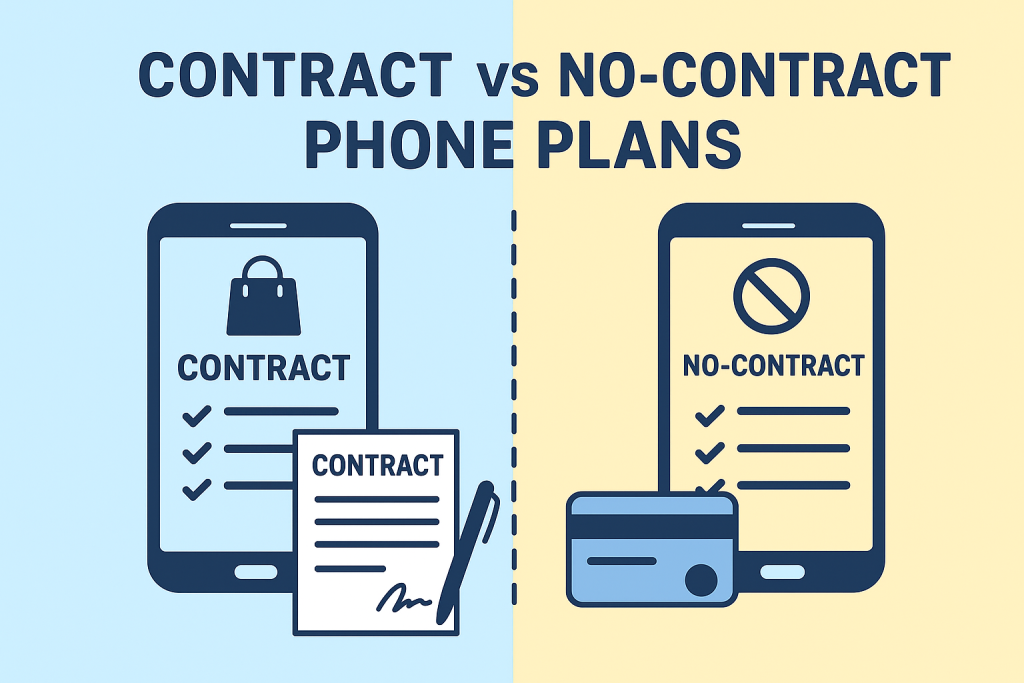
Contract vs. No-Contract Phone Plans: Which One Is Right for You?

Finding the perfect phone plan can be tricky — especially with so many options competing for your attention. One of the biggest choices most people face is whether to sign a contract phone plan or go for the no-contract (prepaid) route.

Both options have their advantages, depending on your budget, lifestyle, and how often you like upgrading your phone. Let’s explore what sets them apart and how to decide which plan makes the most sense for you.


Why the Choice Matters

Your smartphone is more than just a gadget — it’s how you work, connect, and unwind. With that in mind, the right mobile plan should fit your needs, not complicate them.

The rise of 5G networks and the growing competition between carriers have made it easier to find better deals, but it’s also made the decision more confusing. That’s why understanding the difference between contract and no-contract plans can help you save money and avoid unwanted commitments.

If you’re still exploring your options, check out all the available mobile phone plans here to see what’s out there.


What Exactly Is a Contract Phone Plan?

A contract plan is a traditional mobile agreement where you commit to a carrier for a set period — usually 12 to 24 months. In return, you may receive benefits like:

  • A discounted or financed smartphone
  • Bundled features (such as streaming subscriptions or hotspot data)
  • Predictable monthly payments

The tradeoff? You’ll often face penalties or early termination fees if you decide to cancel before the contract ends. Still, many people prefer the consistency and convenience these plans offer.


The Appeal of No-Contract Plans

If flexibility is your priority, no-contract (prepaid) plans might be your best bet. You pay upfront for your talk, text, and data — and once your cycle ends, you can renew, switch, or cancel anytime without fees.

The main perks include:

  • Total freedom to change carriers whenever you want
  • No credit checks or long-term commitments
  • Typically lower monthly costs for moderate or light users

Curious which type fits your lifestyle better? Take a look at prepaid vs. postpaid plans and which one is right for you for a deeper comparison.


Breaking Down the Costs

Price is usually the deciding factor when choosing a mobile plan.

  • Contract Plans: Often have higher monthly rates but include phone financing. Perfect if you want the latest iPhone or Samsung device without paying the full price upfront.
  • No-Contract Plans: Usually cheaper per month, but you’ll need to bring your own phone or buy one outright. Great for anyone who wants to stay budget-friendly.

If you only use your phone occasionally, you might save a lot by checking out the cheapest cell phone plans for light users — these no-contract plans can seriously cut down your monthly expenses.


How 5G Affects the Decision

With 5G networks now widely available, speed and data priority play a big role in choosing a plan.

Most contract plans offer premium access to 5G speeds and higher data caps, while prepaid plans may throttle speeds once you hit your data limit. That doesn’t mean prepaid isn’t worth it — it just depends on how much data you actually use.

To see how 5G is reshaping the way we connect, check out how new phone plans are changing connectivity.


Who Should Go for a Contract Plan

A contract plan is ideal for you if:

  • You want the latest flagship smartphone without paying the full cost upfront
  • You rely on unlimited data and consistent performance
  • You like the extras — like streaming bundles, hotspot data, or device insurance

Who Should Choose a No-Contract Plan

No-contract plans are best suited for people who:

  • Prefer flexibility over long-term commitment
  • Already own an unlocked phone
  • Want to test different carriers before settling on one

A Third Option: The Hybrid Plan

Carriers are beginning to offer hybrid plans, which blend the flexibility of prepaid with the perks of contracts. These month-to-month postpaid options often include device financing without locking you into a long-term deal.

This approach appeals to users who want affordable pricing without sacrificing quality — especially young professionals and families who value control over their budget.


Tips for Choosing the Right Plan

  1. Know your usage habits – Check how much data, talk, and text you use monthly.
  2. Consider your upgrade cycle – If you change phones often, contracts might make sense.
  3. Review coverage – Always look at coverage maps; a cheap plan isn’t worth it if your signal is weak.
  4. Check for hidden charges – Watch for cancellation fees or data throttling limits.

Final Thoughts

At the end of the day, there’s no single “best” choice between contract and no-contract phone plans — it all depends on your priorities.

If you value consistency, perks, and device upgrades, a contract plan will likely suit you. But if freedom, savings, and flexibility matter more, a no-contract plan is the smarter move.

Want to compare both options side by side? Start exploring the latest mobile phone plans available today and find the one that fits your needs perfectly.

Contract vs. No-Contract Phone Plans: Which One Is Right for You? Read More »