
An Introduction to URLLC Technology
What is URLLC?
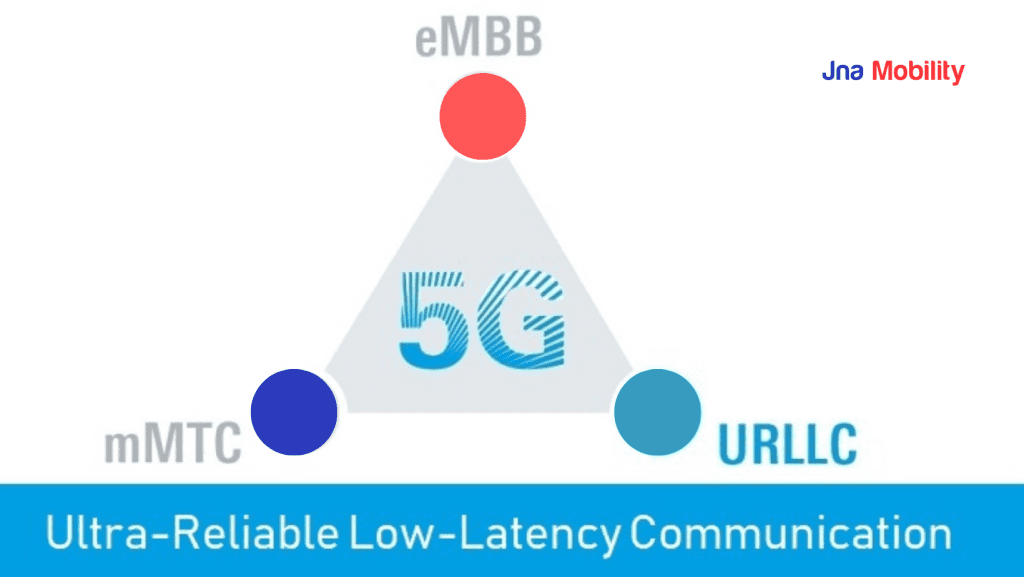
URLLC stands for Ultra-Reliable Low-Latency Communications. It refers to a set of features and mechanisms that allow data transmission with extremely low latency and very high reliability in 5G networks.
More specifically, URLLC aims to achieve:
Latency of 1 millisecond or lower for small data transmissions
Reliability of 99.999% for packet delivery
The “ultra-reliable” part ensures packets are delivered successfully within a specified time frame, even in challenging network conditions. The “low latency” aspect focuses on minimizing delay and lag for real-time applications.
Together, these capabilities enable mission-critical services that demand tight timing controls and very low packet loss rates. This includes uses like industrial automation, remote surgery, autonomous vehicles, and other applications where network performance impacts human safety or large financial costs.
So in summary, URLLC provides the speed, consistency, and precision required by systems that cannot tolerate data delays or interruptions. It expands 5G into specialized areas requiring fully deterministic connectivity.
Importance of Low Latency
Latency refers to the time it takes for data to get from one point to another in a network. While we typically think of throughput (bandwidth) as the most important metric for cellular networks, latency is equally critical for certain applications.
Specifically, ultra-reliable low latency communications (URLLC) refers to the ability to reliably transmit small packets of data with very low end-to-end latencies below 1ms. This level of latency is orders of magnitude faster than what 4G LTE networks can achieve today, which is typically around 10-20ms at best.
Achieving ultra low latency is essential for mission-critical applications where any delay or jitter can have significant real-world consequences. Key examples include:
Industrial Automation – In smart factories, autonomous machines and robots need to coordinate actions and respond to sensor data in near real-time. Even a few milliseconds of delay could lead to production slowdowns or equipment failures.
Transportation Systems – Self-driving vehicles rely on extremely fast sensor data transmission and response times to operate safely. Latency needs to be well below 100ms to allow for proper collision avoidance and smooth rides.
Remote Surgery – Doctors need to be able to control surgical robots and receive haptic feedback with minimal lag for precise procedures. Latency above 10ms could negatively impact surgical outcomes.
AR/VR – To avoid motion sickness and create immersive experiences, augmented and virtual reality systems require very low motion-to-photon latency below 20ms.
Cloud Gaming – Game streaming services must transmit inputs and render frames fast enough to satisfy gamers who expect highly responsive experiences. Latency above 50ms degrades gameplay significantly.
In summary, while we often think of mobile broadband as just enabling media streaming and web browsing, emerging applications demand so much more. Delivering an acceptable user experience means pushing latencies to unprecedented lows – into the single digit millisecond range. This is the central premise behind URLLC in 5G and beyond.
Use Cases for URLLC
URLLC enables several emerging technologies that require extremely reliable low latency connectivity. Some of the key use cases and applications include:
Self-Driving Cars
Self-driving cars need to make rapid driving decisions based on sensor data and communicate with other cars. A delay in data transmission can mean the difference between a smooth ride and an accident. URLLC provides the low latency vehicle-to-vehicle communication necessary for safe autonomous driving.
Industrial Automation
Smart factories with autonomous robots, real-time monitoring, and coordinated assembly lines require the ultra reliable low latency connections URLLC offers. Any lag or delay can lead to breakdowns in automated systems and disrupt the entire production process.
Remote Surgery
Remote robotic surgery allows expert surgeons to operate on patients thousands of miles away. This is made possible by URLLC networks that provide the real-time precise control needed despite the long distances involved. Even the slightest delay could prove catastrophic during complex surgical procedures.
Augmented Reality
Augmented reality overlays digital information and graphics onto the real world. To ensure the virtual and physical environments remain perfectly synchronized, AR platforms depend on URLLC’s high reliability and low latency performance. Any discrepancy can lead to poor user experiences.
5G Enabling URLLC
5G networks are designed to support the ultra-reliable and low latency communications required for URLLC services through several key capabilities:
Network Slicing
One of the most important 5G capabilities for URLLC is network slicing. This allows operators to create multiple virtual networks on top of a common physical infrastructure. For example, a separate network slice can be created just for URLLC traffic. The URLLC slice gets allocated a guaranteed portion of network resources to ensure the capacity, latency, reliability etc. needed for the URLLC use cases. The other slices are unaffected by the resource demands of the URLLC slice.
Edge Computing
5G networks push computing capabilities to the edge of the network, closer to where the users and devices are located. This significantly reduces latency as data does not need to travel all the way to the core network. For time-critical URLLC applications, edge computing is enabling real-time data processing and analytics.
Advanced Antenna Technologies
5G utilizes advanced antenna technologies like massive MIMO. This allows more users and devices to be served simultaneously through beamforming and spatial multiplexing techniques. For URLLC, massive MIMO provides better coverage and link reliability.
Network Analytics
5G networks provide real-time network analytics capabilities using technologies like machine learning. This allows efficient network monitoring and optimization for ensuring quality of service. Network conditions can be monitored proactively to identify and resolve any issues before they impact URLLC performance.
With these 5G capabilities, operators can offer URLLC services with the high reliability and low latency required by mission-critical applications and industrial use cases. The ultra-responsive connectivity of 5G is essential for enabling the real-time control and automation needed in domains like industrial IoT, autonomous vehicles, healthcare etc.
Technologies for Achieving URLLC
URLLC requires major improvements in latency compared to 4G networks. Here are some of the key technologies that allow 5G networks to achieve the 1ms latency target:
Advanced Modulation Schemes
5G uses advanced modulation schemes like 1024 QAM (quadrature amplitude modulation) and Pi/2 BPSK (binary phase shift keying) to encode more data in each waveform. This increases the data rate and reduces transmission time compared to 4G modulation schemes like 256 QAM.
Mini-Slots
5G introduces shorter transmission intervals called mini-slots that are as short as one OFDM (orthogonal frequency division multiplexing) symbol. Mini-slots reduce the wait time for uplink grants, enabling faster turnaround times.
Grant-Free Access
With grant-free access, devices do not have to request uplink grants from the base station before transmitting. This removes the grant request-grant-transmission steps, significantly reducing latency for uplink communication.
Together, these technologies allow 5G to overcome the limitations of 4G and meet the 1ms air interface latency target to enable new real-time applications with URLLC. Ongoing research aims to push air interface latency even lower through further enhancements and innovations.
Challenges for Implementing URLLC
Guaranteeing ultra-reliable low latency communication is challenging due to several factors. Here are some of the main challenges:
Guaranteeing reliability – URLLC requires extremely high reliability, with packet error rates up to 10^−5 or better. This is very difficult to achieve consistently, especially in dynamic wireless environments. Factors like signal interference, network congestion, and channel fading can easily disrupt reliability. Robust encoding, retransmission protocols, and network resource allocation techniques are needed.
Overcoming unfavorable channel conditions – Wireless channels can change rapidly, due to factors like user mobility, obstacles, weather, interference etc. These unpredictable channel variations make it hard to maintain the consistent ultra low latency required by URLLC. Advanced signal processing techniques like beamforming and diversity reception help overcome poor channel conditions.
Power limitations – URLLC mandates the ultra reliable delivery of small packets within a tight deadline. Achieving this high reliability requires transmitting signals with very high power. However, real-world devices have limits on transmit power, so operating within these power constraints poses challenges.
Scalability – URLLC networks need to provide deterministic latency guarantees even as the number of devices scales up. Ensuring consistent ultra low latency during episodes of high network load is difficult. Careful network planning and resource allocation is required for scalability.
Overcoming these challenges requires highly resilient system design across all layers of the network protocol stack. Guaranteeing URLLC performance criteria consistently at scale is an active area of wireless research and development.
URLLC Design Principles
URLLC requires design principles focused on achieving ultra-reliable low-latency communications. The key principles include:
Minimizing Latency
To achieve the 1ms latency target, URLLC requires minimizing delays throughout the network. This includes optimizing the radio interface to reduce transmission time through methods like mini-slot durations and pre-configured grants. The network architecture must also reduce processing delays and optimize routing. Edge computing helps bring applications closer to users to reduce latency.
Maximizing Reliability
URLLC demands 99.999% reliability for mission-critical use cases. To maximize reliability, URLLC uses techniques like ultra-lean transmission, diversity, and redundancy. Error correcting codes, dense deployments, and multi-connectivity provide redundancy across networks. Reaching users through multiple paths improves reliability.
Scalability
URLLC must support scalability for large numbers of devices with critical needs across wide geographic areas. Scalability requires sufficient network capacity and spectrum flexibility. Network slicing enables optimized support for URLLC traffic even as networks scale. Distributed architectures and edge computing also facilitate scalability.
URLLC vs eMBB
URLLC (Ultra-Reliable Low-Latency Communications) and eMBB (Enhanced Mobile Broadband) are two key 5G use cases with very different requirements. While eMBB focuses on delivering high data rates and bandwidth, URLLC prioritizes extremely low latency and ultra reliability.
The key differences between URLLC and eMBB include:
Latency – URLLC requires latencies under 1ms for mission-critical applications, while eMBB can tolerate latencies around 4-20ms.
Reliability – URLLC demands 99.999% reliability. eMBB can operate at 99% reliability.
Data rates – eMBB delivers multi-Gbps data rates. URLLC only requires rates up to ~250 Kbps.
Traffic – URLLC supports intermittent small data packets. eMBB handles continuous high throughput traffic flows.
Density – URLLC connections are sporadic with low device density. eMBB supports dense networks with many active users.
Jitter – URLLC requires precise timing and jitter under 1ms. eMBB can handle 10s of ms of jitter.
Use cases – URLLC enables mission-critical IoT apps like industrial control, autonomous vehicles. eMBB focuses on bandwidth-hungry apps like 4K video streaming.
While eMBB and URLLC have divergent requirements, 5G networks must support both use cases. Advanced techniques like network slicing and edge computing allow operators to deliver eMBB and URLLC over a common infrastructure.
The Future of URLLC
URLLC is an emerging technology that is still rapidly developing and evolving. As 5G matures and new use cases arise, the requirements for URLLC will likely continue to advance. Here are some insights into how URLLC may progress in the coming years:
Evolution of Use Cases and Requirements
Automotive: Autonomous vehicles will demand even lower latency and higher reliability. As vehicles communicate for cooperative driving, traffic management, and safety, sub-millisecond latency may become necessary.
Industrial Automation: As automation expands to new sectors like healthcare and logistics, flexible and adaptable URLLC will be required. Latency and reliability needs will increase as automation grows more advanced.
Augmented/Virtual Reality: These immersive technologies will require highly responsive networks so user experiences are seamless. Latencies below 5ms could become typical.
Smart Cities: Urban applications like traffic flow optimization and public safety will need latency down to 1ms and reliability up to 99.999%.
Financial Trading: High-frequency algorithmic trading demands latencies below 50μs. Reliability requirements will also increase to avoid losses.
As use cases evolve, latency targets could reach 100μs and reliability could approach “six nines” availability (99.9999%). This will put pressure on networks to advance URLLC capabilities.
6G Ambitions
The 6G era will look to take URLLC even further:
Latency below 1ms for general use cases, with specialized use cases targeting latencies below 100μs.
Reliability of 99.99999% and higher for mission-critical services.
Support for extremely dense deployments of Internet of Things devices that require URLLC.
Security and resilience built deeply into the architecture to protect URLLC use cases.
Intelligence integrated into the network to dynamically optimize for URLLC requirements.
Expanded use of higher frequency bands above 100GHz to deliver extreme data rates and capacity.
6G will likely make flexible, adaptable, and ultra-responsive connectivity nearly ubiquitous. it will be an essential enabler to make many emerging real-time applications possible.
Conclusion
URLLC is a unique 5G technology that enables ultra-reliable and low latency communications for mission-critical applications and services. It provides capabilities that were not possible with previous cellular generations. The importance of maintaining extremely low latency and very high reliability is paramount for use cases like industrial automation, remote surgery, autonomous vehicles and more. These revolutionary applications can transform various industries and potentially society as a whole.
However, there are still challenges to implementing it on a wide scale. Ensuring the end-to-end latency from the device to the edge application is very difficult. New network slicing techniques can guarantee quality of service, but deploying the required infrastructure is complex. There is also a need for advances in radio interface design, new waveforms and access protocols optimized for URLLC. Very sophisticated scheduling and edge computing techniques must work together to enable the desired reliability and extreme low latency.
An Introduction to URLLC Technology Read More »