
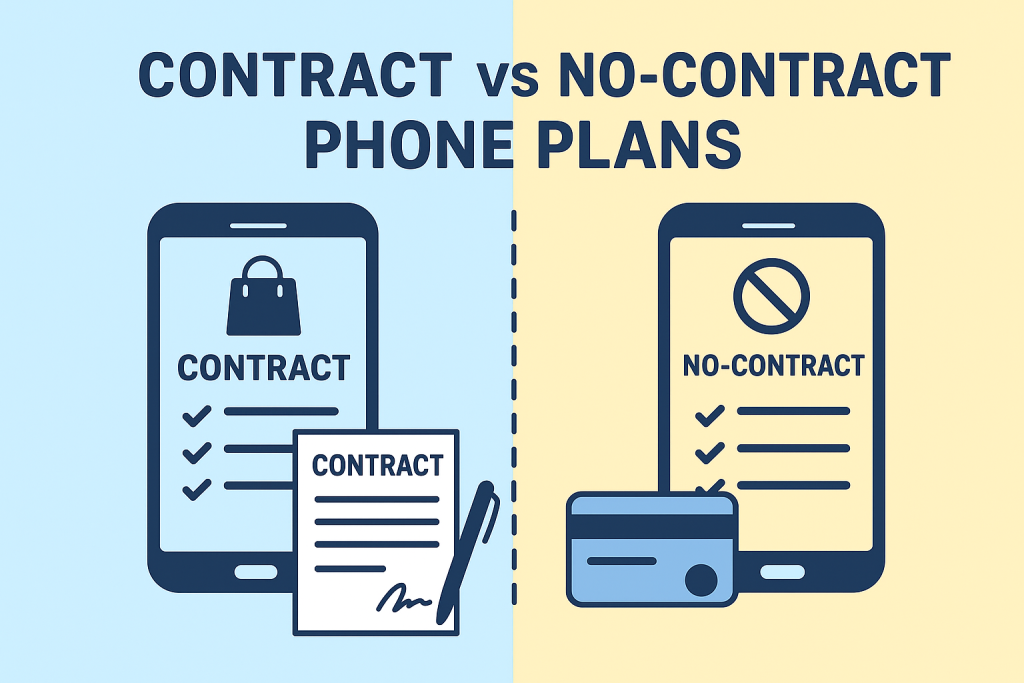
Contract vs. No-Contract Phone Plans: Which One Is Right for You?
Finding the perfect phone plan can be tricky — especially with so many options competing for your attention. One of the biggest choices most people face is whether to sign a contract phone plan or go for the no-contract (prepaid) route.
Both options have their advantages, depending on your budget, lifestyle, and how often you like upgrading your phone. Let’s explore what sets them apart and how to decide which plan makes the most sense for you.
Why the Choice Matters
Your smartphone is more than just a gadget — it’s how you work, connect, and unwind. With that in mind, the right mobile plan should fit your needs, not complicate them.
The rise of 5G networks and the growing competition between carriers have made it easier to find better deals, but it’s also made the decision more confusing. That’s why understanding the difference between contract and no-contract plans can help you save money and avoid unwanted commitments.
If you’re still exploring your options, check out all the available mobile phone plans here to see what’s out there.
What Exactly Is a Contract Phone Plan?
A contract plan is a traditional mobile agreement where you commit to a carrier for a set period — usually 12 to 24 months. In return, you may receive benefits like:
- A discounted or financed smartphone
- Bundled features (such as streaming subscriptions or hotspot data)
- Predictable monthly payments
The tradeoff? You’ll often face penalties or early termination fees if you decide to cancel before the contract ends. Still, many people prefer the consistency and convenience these plans offer.
The Appeal of No-Contract Plans
If flexibility is your priority, no-contract (prepaid) plans might be your best bet. You pay upfront for your talk, text, and data — and once your cycle ends, you can renew, switch, or cancel anytime without fees.
The main perks include:
- Total freedom to change carriers whenever you want
- No credit checks or long-term commitments
- Typically lower monthly costs for moderate or light users
Curious which type fits your lifestyle better? Take a look at prepaid vs. postpaid plans and which one is right for you for a deeper comparison.
Breaking Down the Costs
Price is usually the deciding factor when choosing a mobile plan.
- Contract Plans: Often have higher monthly rates but include phone financing. Perfect if you want the latest iPhone or Samsung device without paying the full price upfront.
- No-Contract Plans: Usually cheaper per month, but you’ll need to bring your own phone or buy one outright. Great for anyone who wants to stay budget-friendly.
If you only use your phone occasionally, you might save a lot by checking out the cheapest cell phone plans for light users — these no-contract plans can seriously cut down your monthly expenses.
How 5G Affects the Decision
With 5G networks now widely available, speed and data priority play a big role in choosing a plan.
Most contract plans offer premium access to 5G speeds and higher data caps, while prepaid plans may throttle speeds once you hit your data limit. That doesn’t mean prepaid isn’t worth it — it just depends on how much data you actually use.
To see how 5G is reshaping the way we connect, check out how new phone plans are changing connectivity.
Who Should Go for a Contract Plan
A contract plan is ideal for you if:
- You want the latest flagship smartphone without paying the full cost upfront
- You rely on unlimited data and consistent performance
- You like the extras — like streaming bundles, hotspot data, or device insurance
Who Should Choose a No-Contract Plan
No-contract plans are best suited for people who:
- Prefer flexibility over long-term commitment
- Already own an unlocked phone
- Want to test different carriers before settling on one
A Third Option: The Hybrid Plan
Carriers are beginning to offer hybrid plans, which blend the flexibility of prepaid with the perks of contracts. These month-to-month postpaid options often include device financing without locking you into a long-term deal.
This approach appeals to users who want affordable pricing without sacrificing quality — especially young professionals and families who value control over their budget.
Tips for Choosing the Right Plan
- Know your usage habits – Check how much data, talk, and text you use monthly.
- Consider your upgrade cycle – If you change phones often, contracts might make sense.
- Review coverage – Always look at coverage maps; a cheap plan isn’t worth it if your signal is weak.
- Check for hidden charges – Watch for cancellation fees or data throttling limits.
Final Thoughts
At the end of the day, there’s no single “best” choice between contract and no-contract phone plans — it all depends on your priorities.
If you value consistency, perks, and device upgrades, a contract plan will likely suit you. But if freedom, savings, and flexibility matter more, a no-contract plan is the smarter move.
Want to compare both options side by side? Start exploring the latest mobile phone plans available today and find the one that fits your needs perfectly.
Contract vs. No-Contract Phone Plans: Which One Is Right for You? Read More »